Our back supports our movements, and continuous back pain can make everyday activities difficult. Most spine problems can be managed with medicines, physiotherapy, and lifestyle changes. However, in severe cases, doctors may recommend endoscopic spine surgery in Delhi to treat the underlying spinal problem.
Endoscopic spine surgery is one of the best treatment options for certain spinal conditions. Unlike traditional open surgery, it is less invasive and causes less damage to the nearby muscles and tissues. However, it is important for patients to know their suitability for this surgery. Doctors first thoroughly evaluate the patient's condition and its severity before recommending this surgery.
If you want to know more about endoscopic spine surgery, read this post. Here, we will discuss the benefits of endoscopic spine surgery, its recovery process, and when doctors may recommend it. Let's get started.
Understanding Endoscopic Spine Surgery – What Is It?
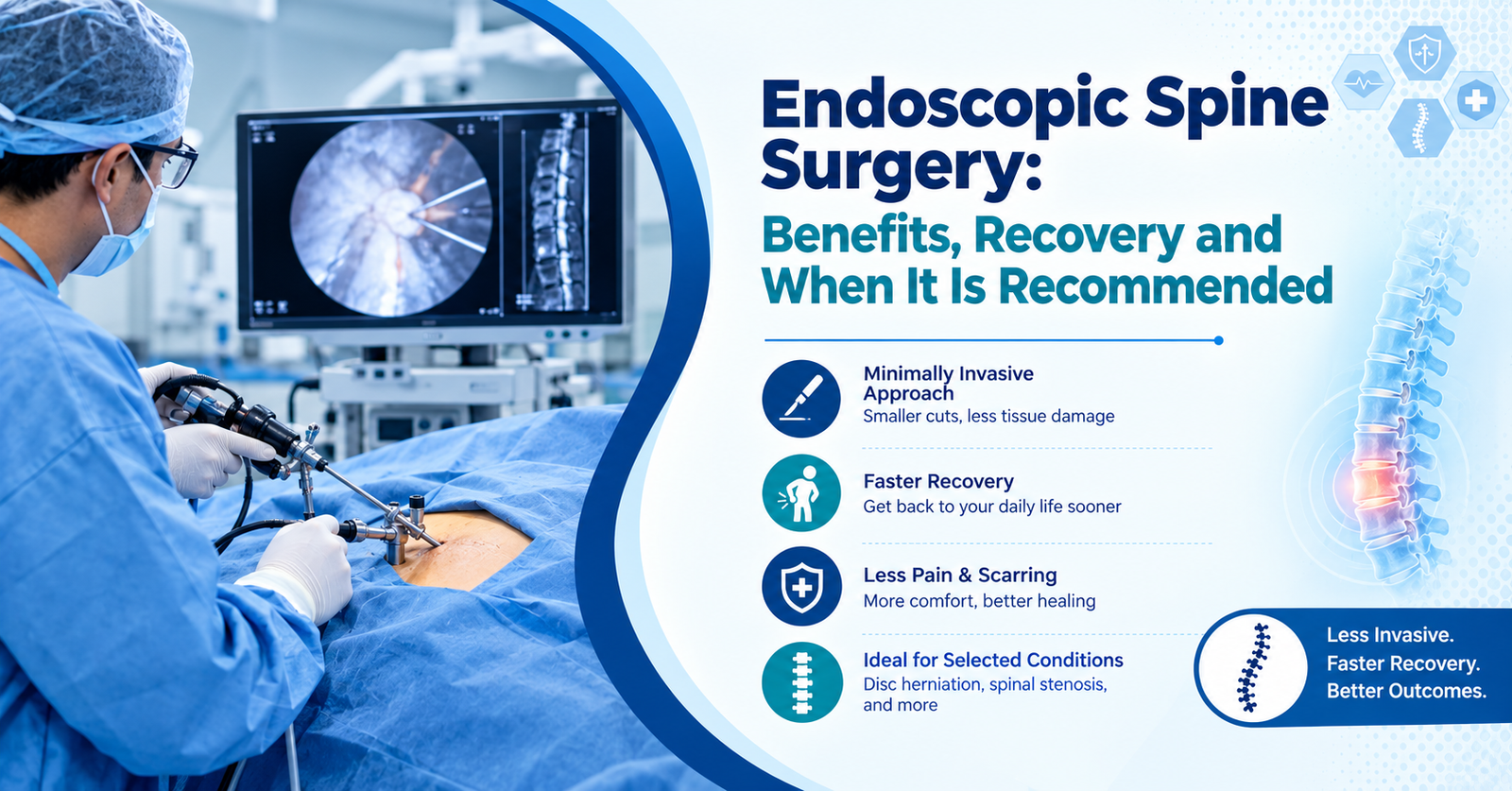
Endoscopic spine surgery is a minimally invasive procedure used to treat certain spinal problems. The surgeon first administers local or general anaesthesia, depending on the patient's needs. This surgery is performed using a small camera and a few other special instruments. During the procedure, the doctor makes a small cut in the affected area and inserts a thin tube with a camera and light. With the help of the camera, surgeons can easily view the affected area on a screen. Then, they use specialised instruments to perform the required treatment.
The procedure depends on the type of spinal problem. Depending on the patient's condition, the surgeon may remove a small part of a damaged disc, remove tissue pressing on a nerve, or create more space for the spinal nerves. Unlike open surgery, endoscopic surgery is less invasive because it uses a smaller cut and causes less damage to the nearby muscles and tissues. However, proper medical evaluation is necessary to determine whether this surgery is right for the patient.
Benefits of Endoscopic Spine Surgery
Endoscopic spine surgery has several benefits, such as:
1. Smaller Incision
Unlike traditional open surgery, endoscopic spine surgery requires only a small incision. The surgeon makes a small cut in the skin to reach the affected area. A smaller cut usually means a smaller scar after recovery. However, the final scar can vary from person to person.
2. Less Damage to Surrounding Muscles and Tissues
Less damage to the surrounding area and muscles is another important benefit of endoscopic spine surgery in Delhi. Traditional open surgery often involves moving the muscles to reach the affected area. Endoscopic surgery requires a small incision to reach the affected area, causing less damage to the nearby muscles and tissues. This can reduce pain after surgery and make movement easier during recovery.
3. Less Blood Loss
Endoscopic spine surgery uses a smaller cut and causes less damage to nearby tissues, which can reduce blood loss. However, the amount of blood loss depends on the type and complexity of the surgery.
4. Faster Recovery
Many patients return to their daily activities sooner after endoscopic spine surgery in Delhi because of its less invasive nature. However, recovery time varies depending on the complexity of the procedure, the patient's health, and the severity of the condition.
5. Shorter Hospital Stay
Many patients go home on the same day or after a short hospital stay. However, the length of the hospital stay depends on the procedure, the patient's condition, pain control, and the hospital's discharge requirements.
6. Relief from Nerve-Related Symptoms
Many patients experience relief from nerve-related symptoms after successful endoscopic spine surgery. The procedure aims to remove pressure on an affected nerve, potentially reducing pain, tingling, and other nerve-related symptoms. However, numbness or weakness may take longer to improve, especially if the nerve has been under pressure for a long time.
Important Note: Like any surgery, endoscopic spine surgery may not provide complete relief and carries certain risks, such as infection, bleeding, nerve damage, or the need for further treatment.
Recovery Process After Endoscopic Spine Surgery
The recovery timeline varies from one person to another, depending on the type of spinal problem, the procedure performed, its complexity, the severity of the condition, and the patient's general health. Some patients recover relatively quickly, while others need more time and support.
Here is what you can generally expect during recovery:
Recovery After Surgery
Within a few days after surgery, doctors often recommend that patients start moving when it is safe to do so. Gentle walking helps patients gradually return to daily activities. Patients may experience some pain or discomfort around the incision during early recovery.
The best spine TB doctor in Delhi generally prescribes medicines and explains how to care for the wound. Doctors also advise patients about lifting, bending, driving, and returning to work. It is crucial to follow your doctor's advice. Although the incision may be small, the affected tissues still need sufficient time to heal.
Recovery in the First Few Weeks
Patients gradually increase their activity levels during the first few weeks after treatment. People with desk jobs may return to work within the first few weeks, depending on their recovery and their doctor's advice. However, those who do heavy lifting or physical work are often advised to wait longer before returning to work to allow their bodies enough time to heal.
Patients may also be recommended physiotherapy sessions for a period depending on the severity of their condition. Physiotherapy helps improve flexibility and strengthen supporting muscles. It can also help patients return to normal activities more comfortably.
Note: Patients should avoid increasing their activity levels without their doctor's advice, even if the incision has healed.
Long-Term Recovery
Most patients gradually return to their daily activities as they recover. However, numbness or weakness may take longer to improve than pain. You must follow your doctor's advice, maintain a healthy weight, practise safe lifting techniques, and perform recommended exercises to support long-term spinal health.
Important Note: Contact your doctor immediately if you develop a fever, severe pain, increasing redness around the wound, new weakness, or any other concerning symptoms.
When Is Endoscopic Spine Surgery Recommended?
Doctors generally recommend endoscopic spine surgery delhi after carefully evaluating the patient's condition. This treatment may be recommended when non-surgical treatments, such as medication and lifestyle changes, fail to provide sufficient relief.
Common conditions that may be treated with endoscopic spine surgery include:
1. Herniated or Slipped Disc
A slipped disc occurs when a spinal disc bulges or moves out of place and presses on a nearby nerve. This often causes back or neck pain, numbness, tingling, or pain in the arms or legs. Endoscopic surgery may help treat these symptoms. Doctors remove the part of the disc pressing on the nerve to help relieve pain and other symptoms.
2. Spinal Stenosis
Spinal stenosis occurs when the space around the spinal nerves becomes narrow, putting pressure on the nerves. It can cause pain, weakness, and numbness. It may also make walking difficult. In suitable cases, doctors may recommend endoscopic surgery to create more space for the affected nerves and reduce pressure on them.
3. Sciatica
Sciatica refers to pain associated with irritation or compression of the sciatic nerve. The pain often travels from the lower back into the buttock and leg. It can occur when a slipped disc or another condition puts pressure on a nerve. Doctors may recommend surgery when appropriate non-surgical treatments fail to provide sufficient relief.
4. Nerve Compression
Nerve compression occurs when spinal structures press on a nerve. Patients may experience pain, tingling, numbness, or weakness. Endoscopic surgery may help relieve this pressure in suitable cases.
These are some common spinal conditions for which doctors may recommend endoscopic spine surgery. However, not every person with back pain needs surgery. It is crucial to consult the best spine specialist in Delhi. The specialist will assess your symptoms, scan results, medical history, and response to previous treatments before recommending surgery.
Who Is a Suitable Candidate for Endoscopic Spine Surgery in Delhi?
Endoscopic spine surgery may be an option for patients whose symptoms and scan results indicate a spinal problem that has not responded adequately to medicines and other treatments. However, endoscopic spine surgery is not suitable for everyone. Some patients may need another surgical approach or traditional surgery, particularly when the spine requires additional support or the condition is more complex.
Before recommending surgery, the best spine tb doctor in delhi Is this conversation helpful so far? assesses the patient's symptoms, medical history, scan results, general health, and response to non-surgical treatments. After a thorough evaluation, the doctor discusses the appropriate course of action, including the expected benefits, possible risks, recovery time, and alternative treatment options.
Note: If you are unsure about endoscopic spine surgery, ask your doctor any relevant questions about the procedure, its benefits, risks, and alternatives.
The Bottom Line
Endoscopic spine surgery is a minimally invasive procedure that may be recommended for certain spinal conditions, including herniated discs, spinal stenosis, and nerve compression. Although it offers several potential benefits, it is crucial to consult an experienced spine specialist in Delhi to determine whether the procedure is appropriate for your condition.
Dr. Bhavuk Garg is an experienced spine surgeon who treats various spinal conditions using advanced medical techniques. He currently works as the Principal Director and Head of Orthopaedics and Spine at Max Hospital, Delhi.
You can consult Dr. Bhavuk Garg to understand your condition, discuss suitable treatment options, and learn more about the procedure, its potential benefits, and its risks.
Concerned about your spine health?
Get an expert opinion from Prof. (Dr.) Bhavuk Garg — Max Hospital Delhi, Ex-AIIMS.
Book a Consultation WhatsApp UsOr send your query