Best Spine & Orthopaedic Surgeon in Delhi
Dr. Prof. Bhavuk Garg
MBBS (Gold Medalist), MS (Orthopaedics, AIIMS), MRCS (Glasgow), FAMS, FACS, FICS, FIMSA
Principal Director & Head — Orthopaedics & Spine Max Hospital, Delhi Former Professor, AIIMS New Delhi
Complex spine and orthopaedic surgery — spinal deformity (kyphosis and scoliosis), robotic and navigated spine surgery, awake spine surgery, endoscopic spine surgery, revision spine surgery, robotic hip and knee replacement, complex trauma and fracture care — the work of one of India’s most published academic surgeons.
- 325+Publications, national & international
- StanfordTop 2% Scientists
- 7Patents & devices
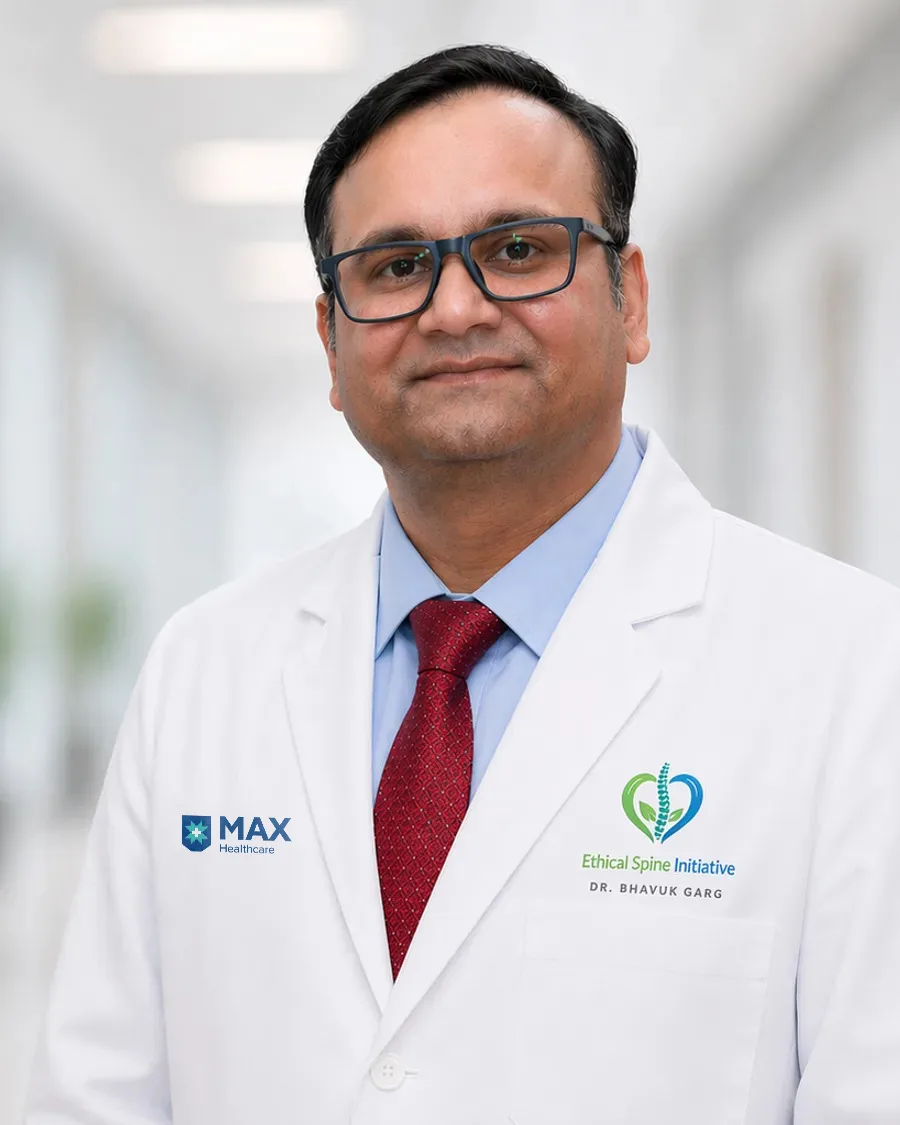
Dr. Garg is Principal Director & Head of Orthopaedics & Spine at Max Hospital, Delhi, and a former Professor at AIIMS New Delhi — a clinician-scientist with 25 years of excellence. As an experienced spine specialist doctor in Delhi, he combines advanced surgical expertise across complex spine and orthopaedic surgeries with a research driven approach that has helped shape how those conditions are treated.
His clinical focus includes complex and severe spinal deformity (kyphosis and scoliosis), robotic and navigated spine surgery, awake spine surgery, endoscopic spine surgery, revision spine surgery, robotic hip and knee replacement, complex trauma and fracture care, shoulder and elbow replacement. For patients looking for the best spine doctor in Delhi NCR, his extensive experience and academic contributions provide a strong foundation for specialized spine care.
His approach is focused on achieving positive outcomes and shorter recovery time through precision-driven, personalised treatment. As a trusted choice for patients seeking the best spine surgeon in Delhi, he is highly committed to clinical excellence and strives to exceed expectations at every stage of patient care.
Alongside the operating theatre, he has authored more than 325 publications in national and international journals, holds seven patents and medical-device innovations, and has been named among Stanford University’s “World’s Top 2% Scientists” for three consecutive years.
Read the full profile →Every spine I operate on belongs to a person with one life. My job begins with an honest conversation — what surgery can achieve, what it cannot, and whether you need it at all — and only then, a safe, balanced spine.
Where complexity is the point
The procedures that define the practice — higher-complexity and signature work, each grounded in published evidence.
- Precision arthroplasty
Robotic Hip & Knee Replacement
Surgeon-controlled robotic arm with 3-D planning for millimetric implant placement, better alignment and faster recovery.
- When the first operation has not worked
Revision Spine Surgery
Planned re-operation for non-union, recurrent disc problems, adjacent-segment disease, hardware failure or recurrent deformity.
- High-energy & peri-articular
Complex Trauma & Fracture Care
Multi-fragment, joint-surface, peri-implant and pelvic fractures — definitive fixation with early protected motion.
- Anatomic & reverse
Shoulder & Elbow Replacement
Replacement of the shoulder or elbow for arthritis, severe fracture, or rotator-cuff–deficient joints.
- Modified PVCR
Complex & Severe Spinal Deformity
A refined posterior vertebral column resection for rigid, severe deformity — developed and refined at AIIMS.
- Precision instrumentation
Robotic & Navigated Spine Surgery
Robotics, navigation and 3D-printed patient-specific guides for accuracy in complex spinal anatomy.
Awake Spine Surgery
Many patients worry about being completely unconscious during spine surgery, especially under general anaesthesia. Awake spine surgery is a minimally invasive approach that uses local or regional anaesthesia with carefully controlled sedation in selected patients — reducing the concerns associated with general anaesthesia and offering a modern, personalised surgical pathway for chronic back and neck pain.
With 25 years of experience, Dr. Bhavuk Garg brings precision, surgical skill and safety together in complex spine care, focusing on personalised treatment and faster recovery.
About awake spine surgery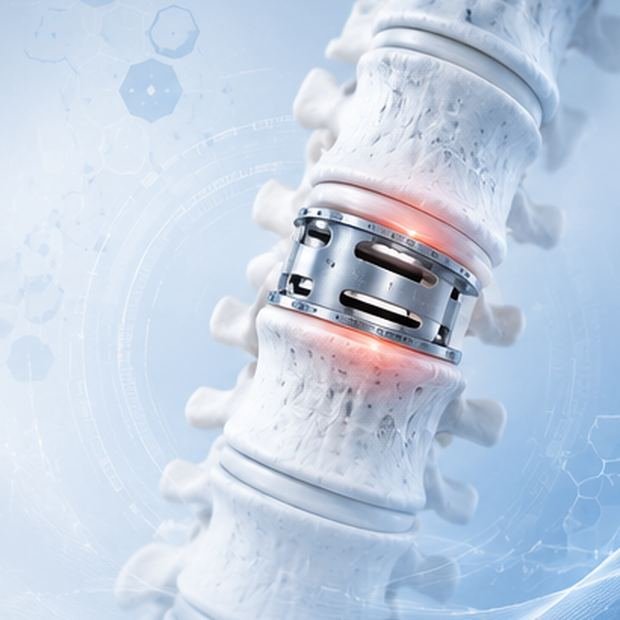
Endoscopic Spine Surgery
A minimally invasive keyhole approach using an endoscope with a high-precision camera, inserted through a very small incision. It is commonly used for slipped discs, nerve compression and spinal stenosis — removing damaged disc material or bone spurs while minimising damage to surrounding muscles and tissues.
The technique reduces post-operative discomfort and supports earlier mobility and faster functional recovery, combining advanced technology and precision to relieve symptoms while preserving spinal stability and function.
About endoscopic spine surgery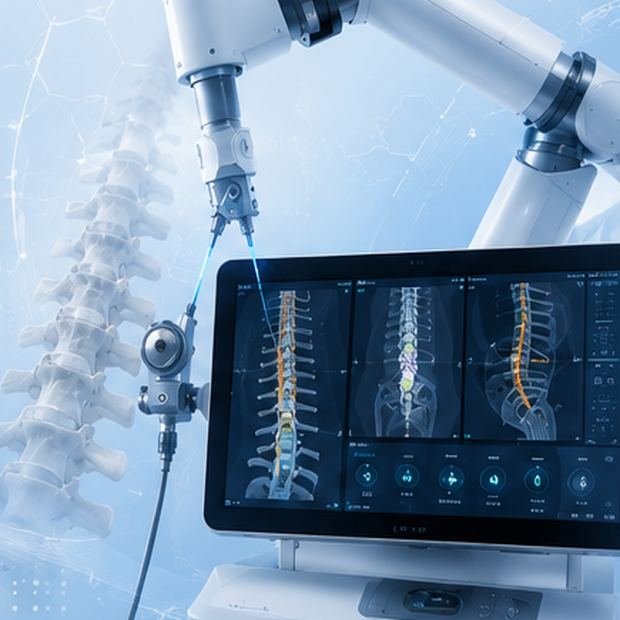
A safer route through the most difficult curves
Dr Bhavuk Garg is an experienced spine surgeon in Delhi providing precision- guided spine treatment focused on safer procedures and successful patient outcomes. As a specialist in complex spinal deformities, he is also recognized as the best scoliosis surgeon in Delhi, helping patients improve lung function, posture and balance.
The Modified PVCR approach- The Tribune AIIMS pioneers safer, more reliable spine surgery technique May 2026
- ANI AIIMS surgical innovation offers new hope for patients with severe spine deformities 3 May 2026
- Medical Dialogues AIIMS Surgical Innovation Transforms Lives of Patients with Severe Spine Deformities May 2026
- Central Chronicle Breakthrough spine surgery technique at AIIMS offers hope for severe deformities May 2026
- Telangana Today AIIMS develops advanced surgical technique for severe spinal deformities May 2026
- NewKerala AIIMS Spine Surgery Breakthrough for Severe Deformities May 2026
- All media features →
Understanding the spine
Plain-language guides written to inform, not to sell — what each condition is, how it is diagnosed, and the options, non-surgical first.
- Scoliosis
- Kyphosis
- Slipped / Herniated Disc
- Lumbar Spinal Stenosis
- Spinal Tuberculosis
- Osteoporotic Vertebral Fractures
- Sciatica
- Cervical Myelopathy
Research that reaches the operating table
Robotic and navigated surgery, 3D-printed patient-specific guides, and machine-learning analysis of spinal deformity — Dr. Garg has gained the reputation of being the best ortho surgeon. His “high-tech” reputation comes from his own funded research, not marketing.
Biodesign, AI & 3D printing →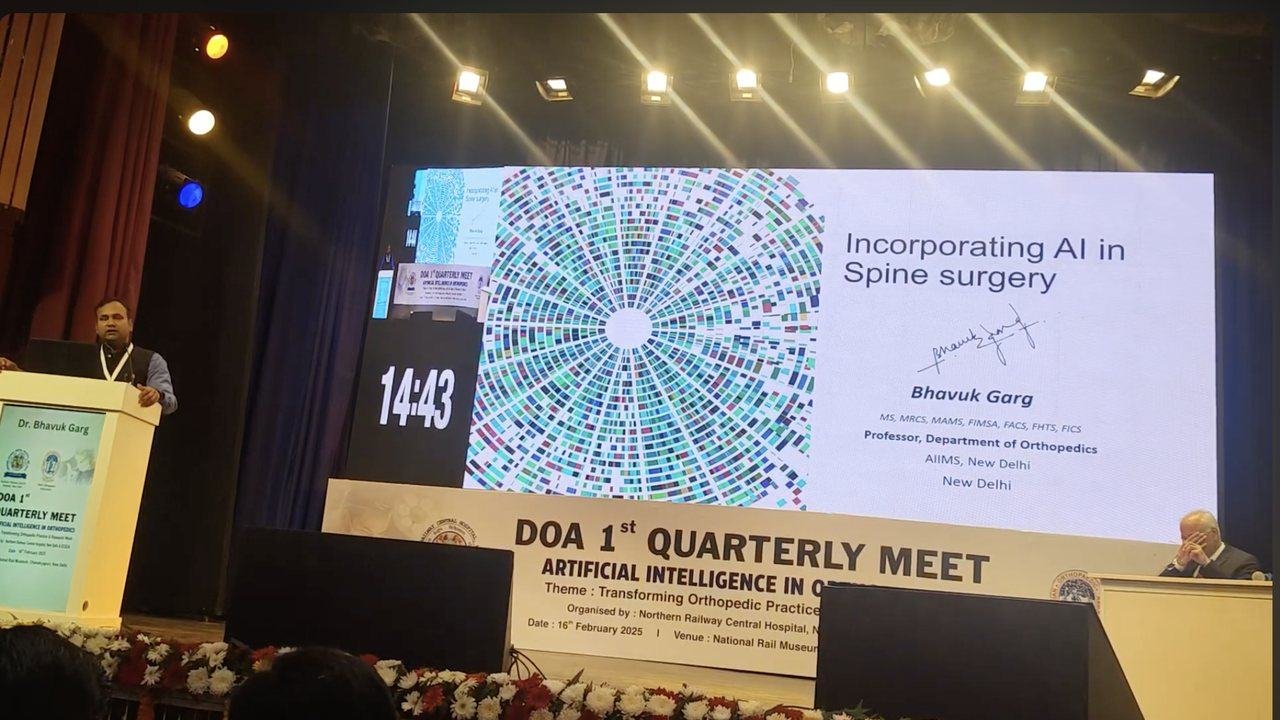
Honoured at home and abroad
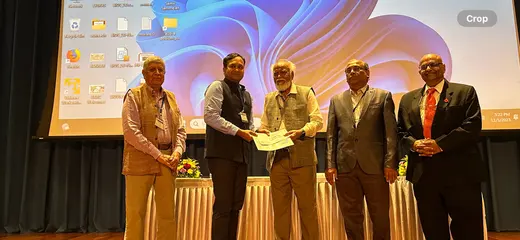
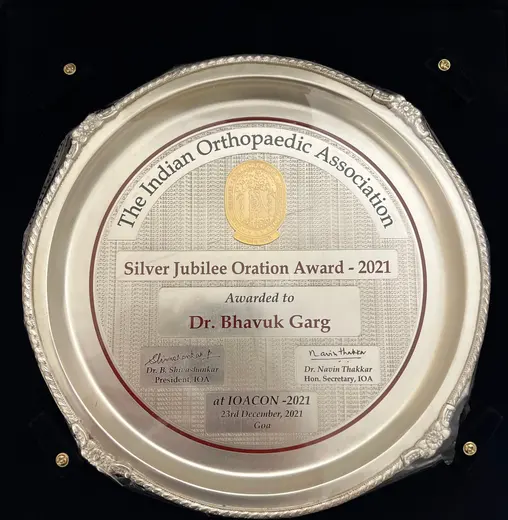
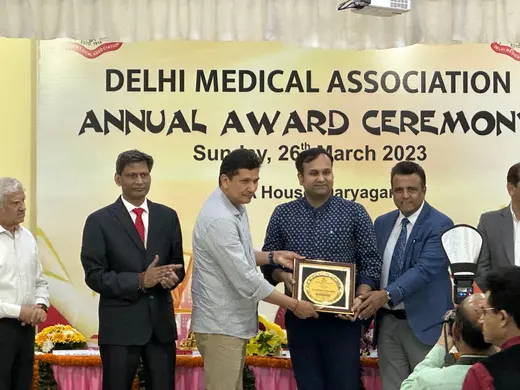
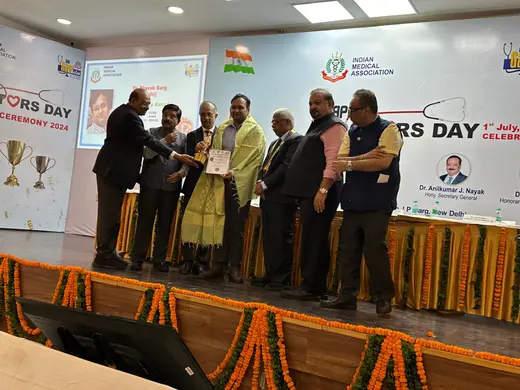
Sixty-two awards and medals, including fifteen gold medals — and three consecutive years on Stanford’s list of the world’s top 2% scientists. As an accomplished spine surgeon in Delhi, Dr. Garg continues to combine medical expertise, clinical excellence and unrelenting patient-centered care in an advancing complex spine care scenario. A few moments from the record.


Spine surgery, answered
Straight answers to the questions patients ask most often — when to seek help, what surgery involves, and what recovery really looks like.
Ask Dr. Garg directly →What does a spine surgeon do?
A spine surgeon diagnoses and treats conditions affecting the spine, spinal cord and nerves — using both non-surgical treatment such as physiotherapy and medication, and surgery for patients with severe or complex problems including nerve or spinal cord compression, instability, deformity or trauma. The range spans minimally invasive procedures through spinal decompression, fusion and vertebral reconstruction.
When should I consult a spine specialist?
Consider seeing a spine specialist when back or neck pain is persistent, recurrent, or begins to interfere with daily activities. Evaluation is also recommended for numbness or tingling in the arms or legs, nerve compression, or difficulty walking. Prompt assessment is particularly important with progressive muscle weakness or loss of bladder or bowel control, as these can indicate serious pressure on the spinal cord.
What are the most common conditions treated by a spine surgeon?
Spine surgeons treat structural, degenerative, biomechanical and traumatic disorders across the cervical, thoracic and lumbar spine. Common conditions include slipped or herniated discs, spinal stenosis, sciatica, cervical myelopathy, deformities such as scoliosis and kyphosis, spinal fractures, tumours and infections, and degenerative spine disease.
Is robotic spine surgery completely performed by a robot?
No. Robotic systems act as high-precision guidance tools — the robot does not perform the surgery independently. The surgeon remains in complete control of every decision, the surgical pre-planning, and each cut, movement and screw placement throughout the operation. Robotics and navigation provide guidance and assistance during appropriate procedures.
Is spine surgery always necessary for back pain?
No. Many spinal conditions improve on their own within three months, or respond to anti-inflammatory medication, physiotherapy, exercise and lifestyle changes. Surgery is considered when lasting pain is linked to a clear structural problem compressing nerves or destabilising the spine and conservative treatment has not worked. In certain situations, such as loss of bladder or bowel control, urgent surgery may be required.
What is the recovery time after spine surgery?
Recovery depends on the procedure, the underlying condition, the patient's age and overall health, and whether surgery was minimally invasive or more extensive. Less invasive techniques, robotic assistance and multidisciplinary care mean many patients now recover faster with a shorter hospital stay. Recovery is planned individually, with guidance on activity restrictions, physiotherapy, wound care and follow-up, and on when it is safe to resume walking, desk work and exercise.